



EvoniK/Fuhua complete construction of H2O2 plant in China
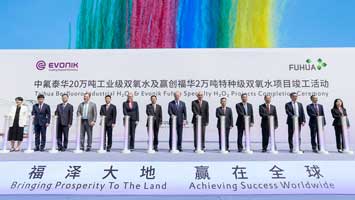
Evonik Fuhua New Materials has completed construction of its hydrogen peroxide (H2O2) facility in Leshan, Sichuan Province, China. The joint venture between Evonik and Fuhua Tongda Chemicals Company (Fuhua) will purify industrial-grade H2O2 into specialty grades to serve high-growth markets in the region. The plant is now preparing to enter trial production, with the first commercial volumes expected in Q2 2026.
Based on technology licensed from Evonik’s Active Oxygens business line, the facility utilises industrial-grade H2O2 produced by Fuhua as a feedstock. The resulting specialty grades will be offered to meet growing regional demand for high-end applications such as solar cell production, semiconductor manufacturing, food packaging, cosmetics, and pharmaceuticals. The plant is designed with an annual production capacity of 20,000 tonnes.
Christian Kullmann, Chairman of the Evonik Executive Board, emphasised the strategic importance of the collaboration: “Evonik’s leading position in the global specialty chemicals industry is built on innovation, strong technology platforms, and a global network. This project showcases our exemplary cooperation model with important partners like Fuhua: By combining Evonik’s technological strengths with Fuhua’s industrial chain and local capabilities, we will jointly provide high-quality solutions for customers in the region and globally.”
Fuhua Chairman Zhang Hua added: “This partnership with Evonik marks an important milestone in Fuhua’s development toward higher-end and more international operations. The project will further enhance Fuhua’s competitiveness and support national development priorities in new energy, advanced manufacturing, and future-oriented chemical production.”
Hydrogen peroxide is a versatile chemical needed for a wide array of industries. It plays an essential role in applications ranging from electronics to renewable energy and aseptic packaging. Yet after use, the chemical breaks down into only oxygen and water – giving it a particularly beneficial environmental handprint.


