



Yara starts up Europe’s largest carbon capture facility in the Netherlands
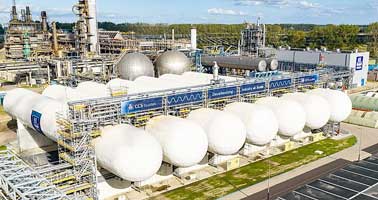
Norwegian energy firm Yara has inaugurated what is said to be Europe’s largest industrial carbon capture facility at its plant in Sluiskil, the Netherlands. The project establishes the first complete cross-border value chain for capturing, transporting and permanently storing CO2 (CCS).
Yara Sluiskil, Europe’s largest ammonia and fertiliser plant can capture and liquefy up to 800,000 tonnes/year of CO2 from ammonia production thereby avoiding carbon taxation on these volumes. The CO2 will be transported by ship to Norway, where it will be permanently stored beneath the seabed by Northern Lights.
With the right framework conditions in place, the project is expected to capture and store around 12 million tonnes of CO2 over the next 15 years, making a significant contribution to European climate goals and industrial transformation.
CCS is a critical part of the climate solution for energy-intensive industries, but also an important enabler of Europe’s industrial competitiveness. The technology makes it possible to reduce emissions from energy intensive industries like fertilizers, ammonia, cement and waste management while maintaining production, jobs and value creation in Europe.
“Europe needs practical climate solutions that deliver real emissions reductions while strengthening industrial competitiveness. The carbon capture and storage project at Sluiskil shows what is possible when innovation and cross-border cooperation come together. This is exactly the kind of project Europe needs to combine climate ambition with a strong and resilient industrial base,” says Wopke Hoekstra, European Commissioner for Climate, Net Zero and Clean Growth.
The project demonstrates how cooperation across value chains and national borders can unlock substantial emissions reductions in European industry. It also shows how shared infrastructure can help accelerate industrial decarbonisation by enabling companies across Europe to access permanent CO2 storage solutions.
Key facts about Yara and Northern Lights’ CCS project
- Yara Sluiskil will capture up to 800,000 tonnes of CO2 annually from ammonia production
- The CO₂ will be liquefied and temporarily stored at Yara Sluiskil
- Northern Lights vessels will transport the CO2 to Øygarden, Norway
- The CO2 will be permanently stored 2,600 m below the seabed by Northern Lights
- The project is expected to capture and store approximately 12 million tons of CO2 over 15 years
CCS enables Yara to further reduce the carbon footprint of its production and support low-carbon value chains across agriculture, industry, energy and shipping, including:
- Low-carbon fertilizers to support more sustainable food production
- Low-carbon ammonia for industrial applications and clean energy solution
- Low-carbon fuels for the maritime sector


