


Ineos opens CO2 storage site in Denmark
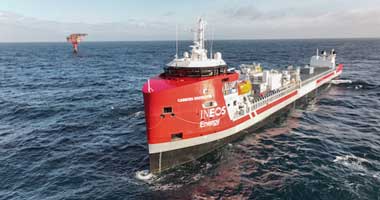
Ineos Energy has officially opened the first full-scale CO2 storage site in Denmark. The Greensand CO2 storage facility is led by Ineos with partners Harbour Energy and the Danish North Sea Fund (Nordsøfonden).
Greensand expects to store up to 400,000 tonnes/year of CO2 in this first commercial phase, scaling toward a potential of up to 4–8 million tonnes/year at full capacity.
For the first time, Greensand provides industry across the EU with the infrastructure it needs to transport and permanently store CO₂ and offers a practical route to reducing emissions without shutting down the industries that Europe depends upon.
Ineos says it will source CO2 primarily from Danish biomethane plants. This enables the full CCS value chain to be established and operated using CO2 volumes that are readily available, while capture projects across industry continue to develop and scale.
Once captured, CO2 is liquefied delivered by truck to a dedicated CO2 terminal at Port Esbjerg, shipped aboard Carbon Destroyer 1 – the EU’s first purpose-built CO2 carrier – and injected into the Nini West reservoir, a depleted oil field some 250 km offshore, approximately 1,800 m beneath the seabed.
In this first commercial phase, Greensand can store up to 400,000 tonnes/year of CO2. The site has been designed to expand significantly, with the potential to store up to 4-8 million tonnes each year as demand grows.
David Bucknall, CEO of Ineos Energy, says: “For years, CCS in Europe has been defined by plans, targets and ambitions. Today, Greensand brings the EU’s first full-scale CO2 storage site and value chain into operation. It provides a foundation on which future Carbon Capture projects across Europe can now build.”
The opening comes at a critical moment for European industry. Europe’s energy-intensive industries directly employ almost eight million people and generate roughly EUR550 billion in value added every year. They are critical to Europe’s security of supply, providing the materials that society and depends on: cement for housing, roads and energy infrastructure; steel for power grids, wind turbines and defence; and chemicals used in everything from water treatment and medicines to cable insulation and electronics. These industries face growing pressure from rising costs and international competition.
At the same time, the EU is working to meet its own CO2 capture and storage targets: 50 million tonnes/year by 2030, rising to 250–280 million tonnes by 2040. Europe remains far from that scale.
Sir Jim Ratcliffe, Chairman of Ineos, said: “Europe will not achieve net zero by closing factories and exporting its jobs. We need solutions that allow industry to remain competitive while reducing emissions. Greensand proves it can be done. This is not a pilot project, a concept or a political ambition. It is a fully operational carbon transport and storage business. The technology works. The storage is ready. The challenge now is creating the right conditions for carbon capture to scale across Europe.”


