




Damage to Qatar’s Ras Laffan to reshape global LNG outlook
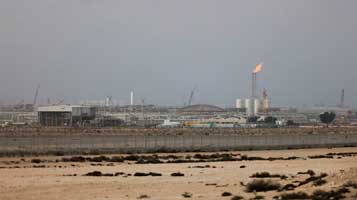
Missile attacks on Qatar’s Ras Laffan Industrial City have caused extensive damage including fires. This fundamentally alters the global gas market outlook, according to Wood Mackenzie analysis. Initial expectations of a two-month disruption are now likely to be exceeded.
The 18 March strike damaged the Pearl GTL facility, while the subsequent attack caused further damage to several of the LNG facilities. Further assessment will be needed to understand the full impact.
Qatari LNG production has been halted since 2 March and declared force majeure from 4 March, removing approximately 80 million tonnes/year, around 19% of global LNG supply from the market. The under-construction North Field East expansion, which would add 32 million tonnes/year, was anticipated for November 2026 startup but now faces potential delays that could reshape supply growth expectations through 2027-2028.
Before the attacks, Wood Mackenzie forecasted four to six weeks to ramp up Qatari LNG production to full capacity, based on a scenario of three days to restart upstream operations and a seven-day ramp-up per liquefaction train. The timeline is now expected to extend depending on the extent of damage and required repairs.
Prior to the conflict in Middle East, Wood Mackenzie expected global LNG supply to grow by 35 million tonnes in 2026. With Qatar producing an average of 6.7 million tonnes/month in 2025, a disruption lasting five to six months would push annual global supply into year-on-year decline.
Asian buyers face the greatest exposure to Qatari LNG, having accounted for around 90% of cargoes in 2025. Several countries are particularly vulnerable:
- Bangladesh: High exposure to spot prices with limited ability to absorb cost increases
- India: Balancing rising energy costs against economic growth impacts
- Taiwan: Limited alternatives beyond increased reliance on coal
Asian LNG demand is now expected to contract. Wood Mackenzie’s pre-disruption growth forecasts of 10 million tonnees had already been reduced to 2 million tonnes under a two-month outage scenario; a prolonged disruption will push demand into decline.
In Europe, lower LNG availability is expected to reduce storage injections and accelerate fuel switching. Gas-to-coal switching is likely to continue. European storage levels may only reach around 70%. For context storage levels reached 76% in October 2021 when Gazprom disrupted Russian pipeline supply.
With supply tightening, LNG operators are expected to maximise output across existing facilities. Planned maintenance, estimated before the war at 5 million tonnes in Q2 2026, is likely to be deferred where possible as operators prioritise production.
Wood Mackenzie expects several strategic shifts:
- Cargoes and contracts from countries with low political and shipping risks become more attractive
- Pre-FID supply outside the Middle East gains appeal
- M&A sellers with diversified assets will see potential price upside
- The premium on contract flexibility increases, with the ability to call or cancel cargoes gaining value
- Portfolio supply becomes more valuable by reducing single-point disruption impact
- Portfolio players with growth ambitions will diversify to manage concentration risk


