



Philippines doubles down on waste-to-energy as post-flood trash mounts
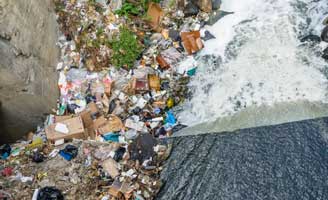
Recent flooding across the Philippines, triggered by heavy rains from the enhanced southwest monsoon and successive tropical cyclones including Luis and Dolphin, has again highlighted the country’s persistent challenges in flood control and waste management. The situation has renewed attention on the need for better waterway management, while the government continues to pursue longer-term measures, including its Waste-to-Energy (WtE) programme.
Philippine President Ferdinand R. Marcos Jr. said the administration will continue pursuing its WtE plan, which converts garbage into electricity, describing the initiative as a significant step once completed. He said the technology is already well established and proven.
The President discussed the program recently during an inspection of a high-vacuum self-priming drainage trailer pump at Alido Bridge in Barangay Zapote, Las Piñas City, where he also reviewed flood control efforts.
Waste management and flooding
Marcos raised the WtE programme while discussing garbage accumulation in canals in nearby Parañaque City. He said much of the waste had been carried in from other areas after canals were cleared, coinciding with high tide. He urged local government units and the public to dispose of waste properly, citing the damage caused by improper disposal.
Dredging reduces flood levels
Marcos also reported progress in Las Piñas city, where dredging along waterways has reduced flooding. Water levels that previously reached chest height reportedly remained below knee level following recent heavy rains, which he attributed to the resumption of dredging ordered by the Department of Public Works and Highways (DPWH).
He said the dredging has been effective but remains insufficient, noting that operations had only recently resumed after a 12-year moratorium that allowed rivers and spillways to become shallower.
The President also instructed Public Works Secretary Vince Dizon to review plans for a long-delayed spillway project in Las Piñas city and determine what changes may be needed to complete it. Marcos described the project as an important component of flood control in Metro Manila.
Dredging will continue in coordination with local governments as part of a longer-term strategy to manage water flow and reduce flood risks.
Manila WtE project
The administration’s WtE plans include a proposed project in Smokey Mountain, Manila. During his working visit to Japan in June 2025, Marcos announced an investment plan by Japan’s Kanadevia Corporation for a large-scale WtE facility intended to convert thousands of tonnes of waste into energy while addressing waste management, flooding, employment, and environmental sustainability.
Osaka-headquartered Kanadevia (formerly Hitachi Zosen Corporation) will serve as the project’s Japanese proponent, co-investor, and technology provider, in partnership with Philippine Ecology Systems Corp. (PhilEco), which specializes in integrated solid waste management and disposal facilities.
Kanadevia operates through four segments, with its Environment segment specializing in waste incineration, recycling, water and sludge treatment, energy and biomass systems, seawater desalination, and wholesale electricity.


